Part 2: Transforming the Fossil Fuel Age into the Space Energy Age
The Space Energy Option
Humanity is at a crossroads: we must decide if we prefer to live and prosper in an energy-rich world or attempt to survive in an energy poor-one. Finding a viable solution to the impending energy and climate crises confronting humanity is urgently necessary. The fundamental causes of these interrelated issues are the many environmental and geopolitical issues associated with the continued use of fossil fuels added to the fact that these are projected to become harder to extract, to distribute, and are more conflict prone. Policies to reduce energy consumption, and inadequate measures currently being implemented by many nations to address these issues, are resulting in energy insecurity. Indeed, the control over the production and distribution of oil and gas is at the core of current military conflicts which are, in turn, impacting the global economy. Thus, a sensible transition to a reliable, sufficient and environmentally neutral alternative source of energy is imperative to preserve and sustain present civilisation, and to provide future generations with sufficient energy and hope for prosperity and peace.
A feasible near-term energy option addressing this situation is called: Space-based Solar Power (SBSP) which is currently being researched and developed in Europe, United States, China, Australia, South Korea and Japan. These ongoing SBSP efforts are testimony to the growing worldwide recognition of the potential contribution of SBSP to addressing the world’s worsening environmental, climate and energy problems. If these efforts continue, they will lead to the development of a series of increasingly powerful test-satellites that will be needed before a major investment of the order of billions of Euros, Dollars or Swiss francs will become feasible.
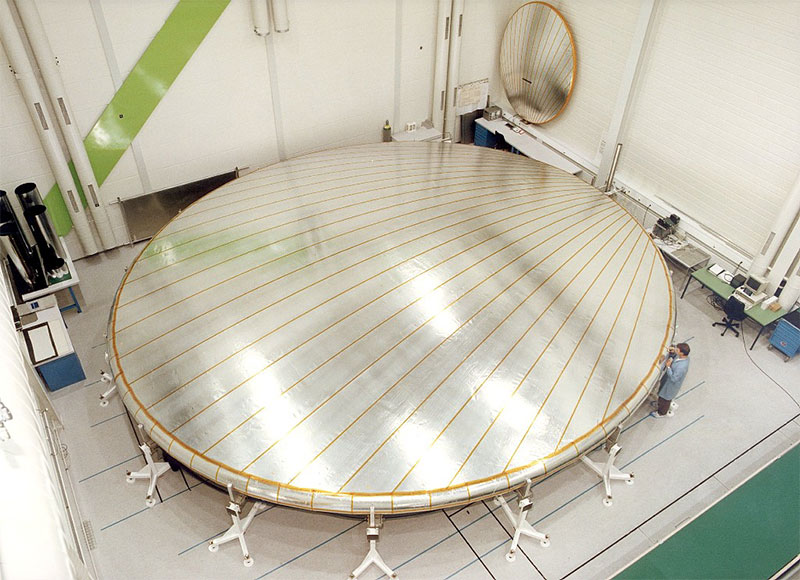
All current Solar Power Satellite (SPS) concepts are designed to be launched from the surface of Earth. These SPSs have dimensions measured in square kilometres and launch masses between 2,500 and 10,000 metric tonnes (MT) per gigawatt (GW). Consequently, installing a single 1-GW SPS into High Elliptical (HEO) or into Geostationary (GEO) orbit around Earth will require 100’s of launches by a fully-reusable, heavy lift launch system such as SpaceX’s Starship or China’s Long March 9, which are currently under development but not yet operational. An additional consideration is the impact on the atmosphere from launching thousands of rockets that will be needed to deploy SPS on the scale of multiple hundreds of GWs, as will be needed to become a viable alternative to terrestrial energy systems. Therefore, significant GW-scale SPS systems cannot be launched only from Earth without seriously impacting the atmosphere. These crucial points need to be emphasized if SBSP is to be considered as an economically feasible and sustainable long-term source of clean energy that does not add harmful pollution to the environment.
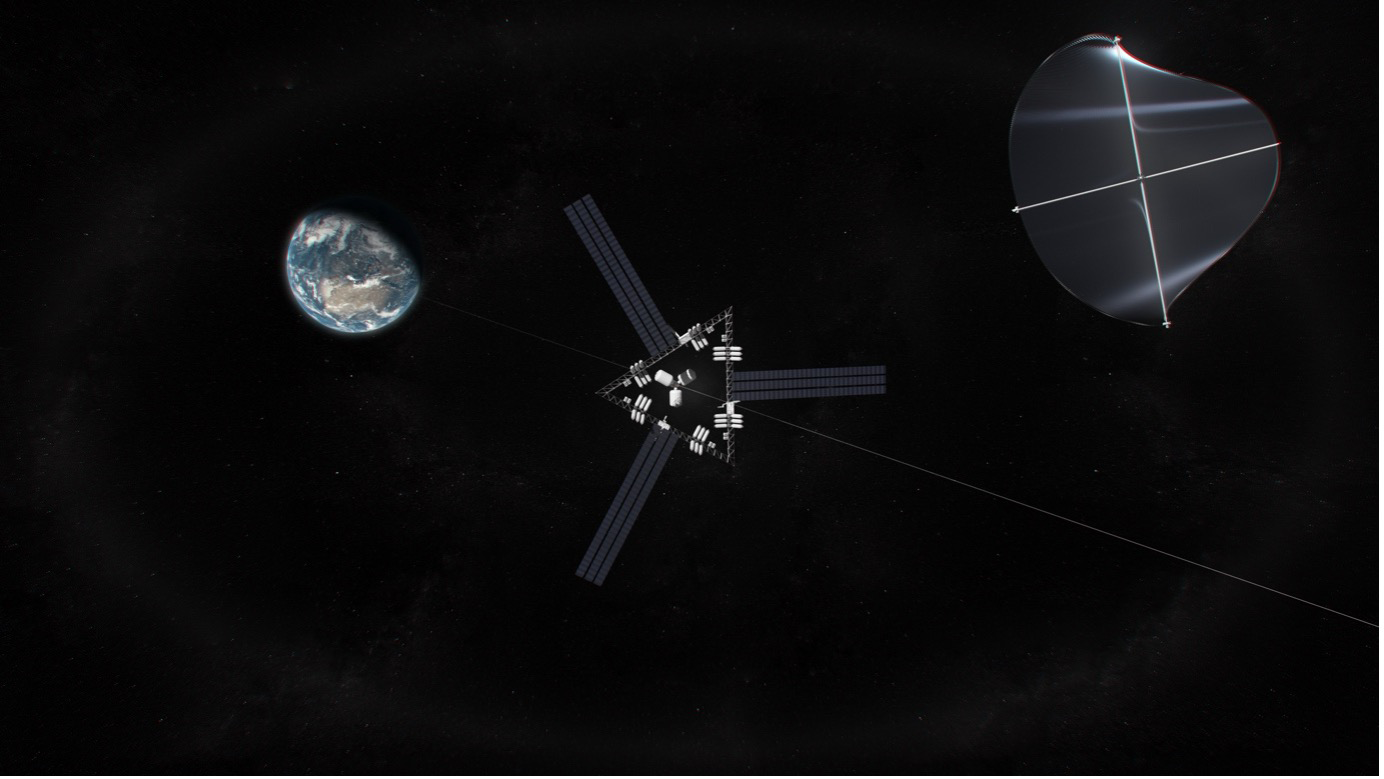
Consequently, based on these logistical and environmental considerations and constraints, successfully implementing SBSP will thus require the establishment of SPS manufacturing facilities on the Moon and an Earth-Moon transportation corridor. This lunar approach to realising and implementing SBSP by industrializing the surface of the Moon – meaning putting factories on the surface of the Moon and processing lunar regolith into the materials needed for the components of Solar Power Satellites (SPS) – and launching those into orbit would be the most cost efficient and cleanest way to do develop SBSP. This would reduce the amount of mass for a SPS launched from Earth by 80% or more as well as reducing costs and the related CO2 emissions. Once this is achieved, then space solar energy becomes the cheapest and cleanest energy source for the Earth. This lunar approach to develop and implement SBSP is called the Space Energy Option.
This option can be used, not only to produce SPS components, but in an earlier stage also for the in-situ production of rocket propellant on the Moon and for creating a cislunar space transportation system and assembly infrastructure in orbit. Although the initial investment would be higher than Earth-only launched SPS systems, the massive and ever-growing energy market on Earth would be the economic driver for this lunar approach to SBSP. Consequently, the self-accelerating flywheel-effects in the process of building up a lunar economy would come into operation quite early and would make the whole system more robust and less dependent on political and economic developments on Earth.
A feasibility study conducted by the Swiss company Astrostrom GmbH for the European Space Agency (ESA) in 2022-2023, called the Greater Earth Lunar Power Station – (GE⊕-LPS) (ESA Contract No: 4000136309/21/NL/GLC/ov.) detailed an innovative concept for manufacturing Solar Power Satellite (SPS) components from lunar materials including three key technologies. The GE⊕-LPS study showed that the terrestrial energy market and the need for clean energy are the economic drivers for developing and utilising the resources of the Moon.
According to the 2026 Energy Institute annual report, global primary energy supply is on the order of 600.3 EJ exajoules (167,000 terawatt‑hours – TWh) in 2025 – a rise of 1.7% over 2024. Fossil fuels supplied about 86% of global energy supply in 2025; renewables accounted for 5.9%, nuclear 5.2%, and hydropower 2.7%. Electricity generation was about 32,200 TWh in 2025 and is expected to increase by 1,100 TWh or 19% per year over the next five years. Projected world energy demand based on estimated population projections of 10 billion will likely approach 250,000 TWh of power annually. Distributed equally, this would be a per capita energy consumption of 2.5 kW. The global energy economy was roughly a US $10-trillion-per-year market in 2025, although no single standard measure captures every part of it. Undoubtably, it is projected to continuously expand creating a substantial potential market for reliable, zero-carbon electricity generation and enabling infrastructure.
Thus, supplying this terrestrial energy market with clean energy from space is an unparalleled business case for returning to the Moon. Creating a cislunar transportation system and a mining and manufacturing infrastructure on the Moon are major engineering challenges. Although these are substantial challenges, no technological or scientific breakthroughs are necessary for developing the Space Energy Option.
There are, of course, serious risks and unanswered questions. NASA and ESA both stress that SBSP still faces major technical, economic, environmental, and regulatory hurdles, including launch costs, safe wireless transmission, cybersecurity, and the need for broad public acceptance. The standard criticism for deploying a space solar power system has been the initial cost, especially the cost of launching massive amounts of hardware into orbit. Mass producing fully reusable launch systems and the use of lunar materials could significantly reduce costs and the environmental impact of launching space solar power systems from the surface of the Earth.
GEEO – the Greater Earth Energy Organisation
Greater Earth is a region defined by the Earth’s gravitational Sphere of Influence and by celestial mechanics. This region, which includes the Moon and near Earth asteroids has a diameter of 3 million kilometres and has about 13 million times the volume of the Earth itself and through it, passes more than 55,000 times the amount of solar energy which is available on the surface of the planet. This sphere of influence extends between the Sun-Earth Lagrange points L1 and L2, which lie along the line joining the centres of the Earth and the much more massive Sun, indicates the outer boundaries of this region. To supply Earth with a substantial percentage of its future energy needs will require the development of Space-based Solar Power systems developed and deployed in the region of Greater Earth. This would require a multinational approach to de-risk the initial investment and to de-risk the geopolitical conflicts over the control and distribution of space energy resources.
Astrostrom’s GE⊕-LPS feasibility study commissioned by ESA proposes the establishment of a Greater Earth Energy Organisation (GEEO) as an international Public-Private Partnership (PPP) to enable and implement the Space Energy Option. The primary goal of the Public-Private Partnership would be to efficiently provide an indefinitely scalable supply of environmentally clean energy to the entire world in an equitable, economical, sustainable, conflict-free and socially just manner.
The public entity represents an autonomous multinational treaty organisation consisting of nation-stakeholders, independent of any other governmental organisation or influence, with a mutual interest to achieve energy security for their nations while reaching climate goals. The requirements and operations will be established by a treaty agreement among the participating nations. Each public member’s contribution to the GEEO would be determined by an efficiency coefficient that is based on its population and its per capita energy consumption, and distributed on juste retour (fair return) principle. As such, on a per capita basis, each member’s contribution to the GEEO is equal in relation to their energy use.
The private entity will consist of a consortium of companies, institutions, organisations and individuals with a strong motivation to transform the fossil fuel age into the space energy age. These private entities will provide competence and supporting technologies to develop and implement the aims of the GEEO. The private entity will be managed on a membership basis by the GEEO association. Membership fees will be specific for each membership category and decided by GEEO board and approved by the general assembly.
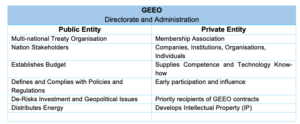
The GEEO will be incorporated as an international NGO association based in Switzerland and will be responsible for setting-up and administering the PPP, coordinating and interfacing with the public and private entities and then managing the research and development programmes. The operations of the GEEO will be financed by the membership fees of the private entity and by a percentage of the yearly contributions to the budget from the public entities.
The GEEO is considered as the most promising approach to implementing the Space Energy Option and, by doing so, taking a decisive step towards creating a new worldwide ‘space energy industry’. This approach will de-risk the initial investment while also allowing the GEEO to address the regulatory issues of spectrum allocation, orbital positioning, energy distribution issues, and compliance with international treaties and laws. Of further importance, this collaborative global organisation should become a catalyst for reducing geopolitical tensions over the control and distribution of energy resources, not the least through greatly increasing the available supply of energy worldwide.
The GEEO will be established as an autonomous not-for-profit international association to manage the interface between the public and private partner entities. The main advantage to having such an organisational and legal structure will be to avoid conflict or destructive competition between nations, and to provide a transparent process for the development and eventual distribution of this new space energy resource. The approach will also make the GEEO compliant with existing international space treaties and accords. As such, it will address the political issues related to the ownership and control of extraterrestrial resources and specifically lunar resources, which is currently a much-debated topic in space circles.
As technological and economic progress are closely correlated with per capita energy consumption, there is a close fundamental correlation between the stage of development of a country and its energy consumption. Developed countries have the highest per capita consumption of energy. Poorest, least developed countries have the lowest per capita consumption.
To achieve, as far as possible, a fair participatory plan reflecting the energy procurement and development process, and to stimulate energy use responsibility, each member’s contribution to GEEO will be determined by an “efficiency coefficient” that is based on its population and its per capita energy consumption. A country with a high per capita consumption of energy and a small population would contribute correspondingly more into the GEEO budget than a country with a large population and lower per capita energy consumption.
Although all nations are welcome to join the GEEO, the initial target nations are those nations with existing space agencies or space programmes. As of 2024, nearly 80 different government space agencies are in existence, including 70 national space agencies and six international agencies. These space agencies include ESA with 22 full members and 9 associate members. The African Space Agency includes 55 member states of the African Union. Some of the members of these agencies have their own national programs. Another 28 nations are considering establishing their own space agency. Considered to be the most likely candidates, all these nations will be contacted and invited to join the GEEO.
However, any nation may join the GEEO. The first nation to join the GEEO will become the Anchor Stakeholder and will be the first country to contribute to the GEEO budget. This nation would sign a ‘Partnership’ contract with the GEEO which officially establishes the PPP arrangement and establishes the parameters for subsequent member nations. Having an initial Anchor Stakeholder will help to attract and motivate other stakeholders to join the GEEO.
The GEEO will be modelled on existing and established international organisational examples as a dedicated collaborative approach to implementing SBSP. These examples include Intelsat, ESA, the European Space Agency and ITER.
- INTELSAT (1964-2001) an intergovernmental consortium which developed, owned and managed the first constellation of communication satellites before it was privatized in 2001. Financing was shared among the participating members according to members’ so-called investment shares which were proportional to each member’s use of the system, as determined on an annual basis.
- ESA, the European Space Agency was founded in 1975, with the ESA Convention signed on 30 May 1975 by its ten founding states. ESA’s activities fall into two categories – ‘mandatory’ and ‘optional’. Programmes carried out under the General Budget and the Space Science programme budget are ‘mandatory’; they include the agency’s basic activities (studies on future projects, technology research, shared technical investments, information systems and training programmes). Optional programmes cover areas such as Earth observation, telecommunications, satellite navigation and space transportation. Similarly, ESA’s share of the International Space Station and microgravity research are financed by optional contributions. From its beginning, ESA has applied a principle of juste retour (fair return) in its industrial procurement policy of geographical distribution. The juste retour principle means that national contributions are distributed only to selected research teams from that particular country. Simply stated this is based on the ratio between the share of the weighted value of contracts a member country receives, and the country’s contributions paid to ESA. This percentage of a member’s contribution is called the “industrial return coefficient”. For example, with a coefficient of 98% a member country can expect to receive 98% of its annual contribution in the value of contracts placed with its local industries.
- ITER (International Thermal Experimental Reactor project) an intergovernmental organisation that was created by an international agreement signed in 2006. The purpose of the ITER Organisation is to “provide for and promote cooperation among the Members of the ITER Project, as an international collaboration to demonstrate the scientific and technological feasibility of fusion energy for peaceful purposes. It acts as the overall integrator of the project and operator of the ITER facility. It is estimated that over US $ 45 billion has been invested into the development of this energy option. In 2025, global private investment in fusion hit a record $US 4.48 billion, up 69% from a year earlier.
Ideally, the GEEO should be based in a neutral country with a credible regulatory framework. For political, legal and economic considerations, an ideal nation for locating the GEEO would be Switzerland which hosts more than 40 international organisations. These include international organisations such as the IOC. The International Olympic Committee (in French, Comité International Olympique CIO) and FIFA (Fédération Internationale de Football Association) have their headquarters in Switzerland, and both are registered as “associations” which, under Swiss law, allows them to have a tax-free status if requested. Both organisations have grown to manage budgets amounting to billions of dollars. Other examples are the World Health Organisation (WHO), the Bank for International Settlements (BIS), and the World Economic Forum (WEF), some of which have additional diplomatic privileges. However, other nations may wish to host the GEEO.
Any nation may join the public entity of the GEEO-PPP and participate in the GAP (General Assembly of Partners). The GAP will meet regularly and, together with GEEO directorate, determine its immediate development goals and set a corresponding yearly budget to achieve these goals. A yearly congress including member nations, their technology sectors that have become involved, and the GEEO private partners will exchange information, discuss challenges and solutions, collaborate and plan the needed research and development programs.
The Geopolitical Case for the GEEO
As a precedent and as geopolitical inspiration, the GEEO refers to the International Space Station (ISS) which has become a symbol of peaceful cooperation because nations that once competed intensely in space – especially the United States and Russia – built, operate, supply, and inhabit one shared orbital laboratory. Its governing treaty explicitly defines it as a permanently inhabited civil station for peaceful purposes, under international law.
The ISS emerged after the Cold War from the 1993 merger of the US-led Space Station Freedom project with Russia’s planned Mir-2 station. This made a major human-spaceflight program a practical partnership between former geopolitical competitors. Today, five space agencies share responsibility. NASA, Roscosmos, ESA, JAXA, and the Canadian Space Agency jointly operate the station, contributing modules, crews, robotic systems, cargo vehicles, launch services, research facilities, and mission control capabilities. The ISS has been continuously occupied since November 2, 2000, when the three-person Expedition 1 crew arrived.
The ISS was designed to be interdependent. No partner can run the ISS entirely alone: its operations depend on internationally provided hardware, expertise, transport, communications, crew training, and scientific infrastructure. This cooperation is backed by law, not just goodwill. The 1998 Intergovernmental Agreement established a long-term framework for partnership, defining responsibilities, rights of access, jurisdiction over national modules and personnel, and peaceful civil use. People from many countries live and work together. Crews conduct experiments, maintain the station, and respond to emergencies as one team. As of 2010, the total cost of the ISS was estimated at US $150 billion which describes it as the most expensive single item ever constructed.
The ISS is not free from political tension on Earth, but its continuing day-to-day operations show that space cooperation can persist through changing international relations. It demonstrates a model in which countries retain control of their own contributions while accepting mutual dependence for a common civil mission. In that sense, the ISS is both a laboratory and a diplomatic institution: a visible reminder that difficult technical and political problems can be managed collectively when partners share rules, risks, benefits, and long-term goals.
It is expected that the GEEO will be a new and much needed platform for peaceful international cooperation in space.
The geopolitical case for implementing the Space Energy Option addresses the question whether space development can help reduce the pressures on Earth that so often feed conflict: energy insecurity, fossil‑fuel dependence, environmental degradation, and competition over strategic resources. In that sense, it means using the space environment not as an escape from planetary crisis, but as a tool for easing it.
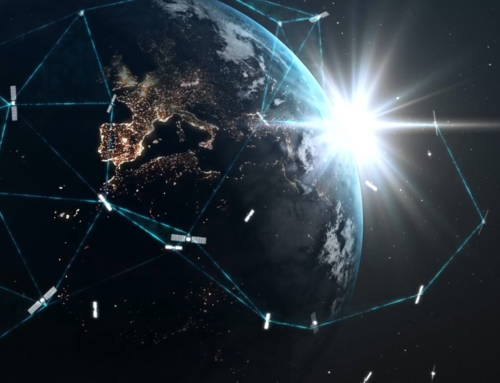
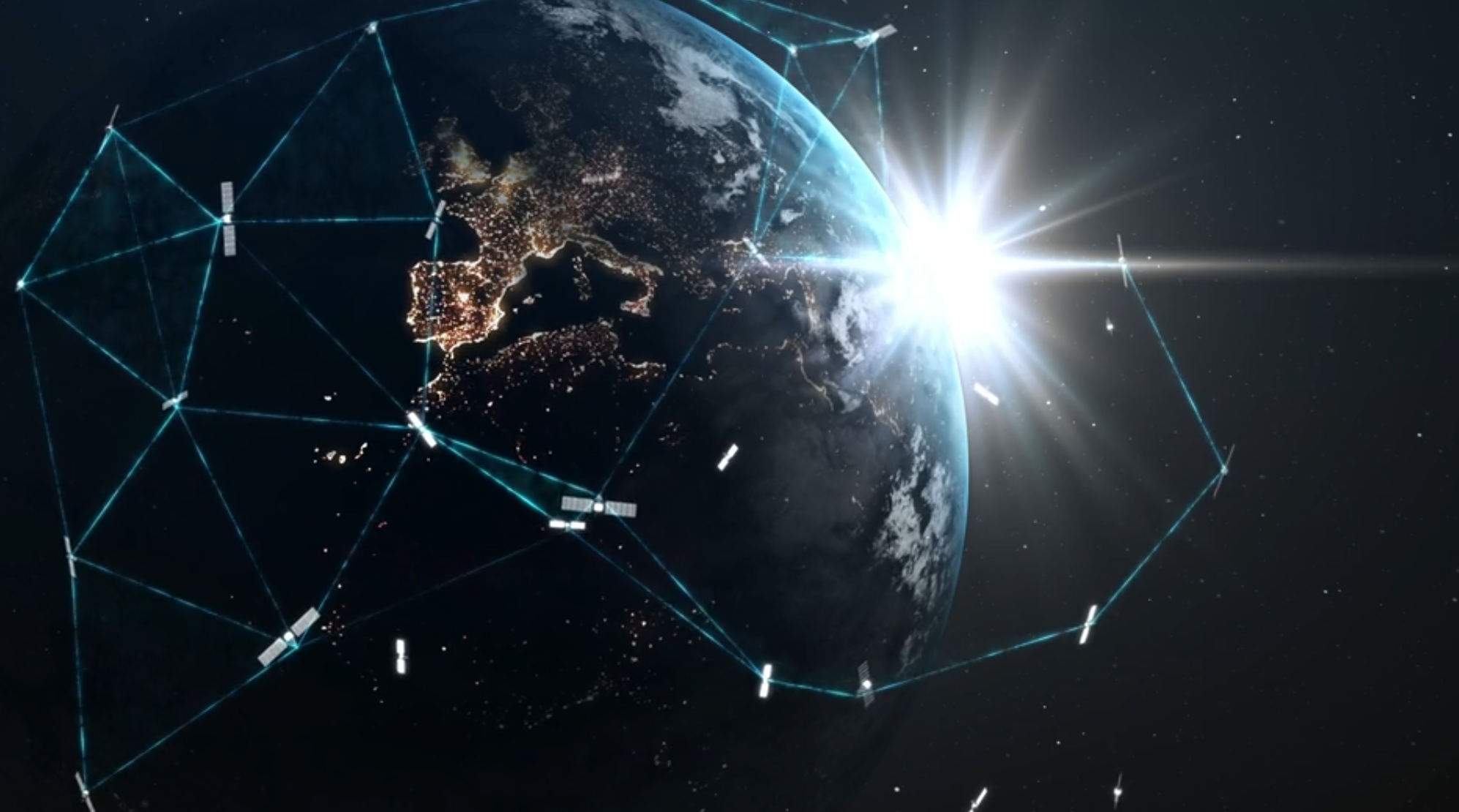
This is where Space‑based Solar Power, or SBSP, becomes especially important. The concept is simple in outline: very large satellites in high orbit collect sunlight almost continuously, convert it into electromagnetic energy, and beam it down to Earth, where it is transformed into electricity for the grid. Because these systems would operate above clouds, weather, and the daily cycle of night and day, they could provide stable clean power around the clock in a way terrestrial solar panels cannot.
The geopolitical attraction of SBSP lies in the combination of abundance and continuity. On Earth, energy systems are shaped by geography: some countries sit on oil and gas reserves, others control pipelines or sea lanes, and others depend heavily on imports. Renewable energy changes this picture, but not completely, because wind and solar remain intermittent and often require large land areas, storage systems, and new transmission infrastructure. SBSP offers a different possibility: power generated in orbit and delivered where needed, potentially weakening the old logic in which control over scarce terrestrial energy sources translates into geopolitical leverage.
That prospect matters for easing conflicts because many of the world’s tensions still revolve around access to fuel, electricity, and industrial capacity. If clean power becomes far more abundant and less tied to a few strategic chokepoints, then one of the classic drivers of rivalry could begin to lose force. Countries would still compete in many domains, but the incentive to dominate oil fields, shipping routes, or vulnerable supply corridors could diminish as alternative energy infrastructures mature.
Yet the technology alone does not guarantee such an outcome. A world in which a few states or corporations own orbital power stations and decide who receives energy, at what price, and under what political conditions could reproduce many of the same inequalities and dependencies found in the fossil‑fuel era. In that case, SBSP might shift the terrain of power politics without softening it. The crucial issue is therefore institutional: how can space energy be organised so that it reduces geopolitical tension rather than creating a new source of it?
The Greater Earth Energy Organisation as proposed in this article will be dedicated specifically to developing and delivering clean energy from the “Greater Earth System”, meaning Earth orbit and the cislunar space economy that could support large space energy infrastructure. In this model, SBSP is not left to fragmented national competition. It becomes the core mission of a cooperative international body designed to expand the global energy supply while reducing environmental damage and geopolitical stress.
The GEEO offers a practical bridge between the technical promise of SBSP and the hope for a lessening of geopolitical tensions and conflicts over the production and distribution of energy. Instead of assuming that energy from space will naturally be shared fairly, GEEO tries to build fairness into the organisational structure from the start. The GEEO incorporates an autonomous treaty organisation paired with a public–private partnership, where participating nations provide the political and financial framework, and industrial partners provide the technical expertise and build the required systems. In other words, the proposal treats energy from space as a matter of international governance and cooperation, not just engineering and finance.
The GEEO is also an economically rigorous plan and not just symbolic. The proposal draws on the historical precedent of INTELSAT, and the ESA‑commissioned Greater Earth Lunar Power Station feasibility study. This describes a long‑term investment on the order of CHF 100 billion (CHF 100 billion = € 106 billion / US$ 123 billion) to develop launch capacity, cislunar transport, lunar resource operations, and solar power satellite systems for terrestrial use. That is a very large sum, but not unprecedented in the context of flagship space programmes and global energy infrastructure. The key political claim is that this investment would not be spent simply on exploration prestige, but on building a profitable new energy industry new energy industry supplying innumerable customers on Earth and, creating many new related business opportunities. Thus, it represents a solid and unparalleled business case for returning to the Moon.
The governance design is also meant to reduce suspicion among states. Establishing the GEEO in a neutral country such as Switzerland and structuring participation through a General Assembly of Partners in which nations can join as stakeholders. Contributions would be scaled through a formula that considers both population and per‑capita energy use, while most of each country’s contribution to the GEEO would return to its domestic industry through a “fair return” contracting model inspired by ESA. That matters politically because it links global cooperation to national economic benefit: governments could justify participation not only as climate policy, but also as burden-sharing industrial strategy and employment policy.
In a geopolitical context, the GEEO is not just a proposal to generate electricity from space. It is a proposal to govern that electricity in a way that reduces the chance of energy becoming a new instrument of coercion. If power satellites are owned, regulated, and expanded through a shared multinational treaty organisation, then the system begins to look less like an orbital empire and more like a new layer of common infrastructure. That does not eliminate politics, but it changes its character. Competition over scarce fossil fuel reserves could gradually give way to negotiation over shared abundance.
There are, of course, serious risks and unanswered questions. A treaty organisation such as GEEO would also have to answer difficult questions about voting power, liability, access for poorer countries, and protection against geopolitical capture by major powers. But these are precisely the right questions to confront early. They show that the real challenge is not whether peace and energy can be linked, but whether institutions can be built strong enough to make that link credible. Seen this way, the GEEO is a geopolitical project to reduce the structural causes of conflict by enlarging the energy base available to humanity and by doing so through cooperative space governance rather than strategic rivalry. SBSP provides the technological horizon; GEEO provides one possible institutional path. Together, they suggest that the benefits of space development need not stop at exploration or profit. Under the right framework, they could become part of a wider architecture of planetary stability.
Most people would agree that it would be preferable to live in an energy rich world rather than in an energy poor world. This applies not only to the current standard of living but also having sufficient energy to tackle other global problems such as restoring the environment, adapting to climate change, providing adequate clean water, ending poverty as well as providing hope for a positive and peaceful future for all humanity. If existing alternative terrestrial energy resources cannot be realistically scaled to meet humanity’s future energy needs and as a replacement for fossil fuels, then neither will regulatory frameworks, taxes on CO2, carbon trading schemes, nor new business models to change society’s energy habits nor wars over the control and distribution of energy resources. The time to address and solve the Energy Trilemma now. Establishing the GEEO to harness the energy resources in the region of Greater Earth is a realistic, pragmatic and equitable way to do so.
The Space Energy Option should be and evaluated and compared with all other energy security and climate mitigation options currently available to humanity. The GEEO should be built upon previous examples of multinational institutions, and it could become the SBSP investment vehicle as a counterpart to ITER which serves the fusion industry. While humanity is indeed at a crossroads, it is also on the threshold of transforming the energy-constrained Fossil Fuel Age into the energy-abundant Space Energy Age.
Link: Greater Earth Lunar Power Station – (GE⊕-LPS) https://www.esa.int/ESA_Multimedia/Images/2023/07/Lunar_solar_power_satellite